Interoceanic corridor of the Isthmus of Tehuantepec

The construction of the Interoceanic Corridor of the Isthmus of Tehuantepec is among the mega-projects of the current Mexican Federal Government. This corridor will place the Isthmus in a central position in the global trade by connecting the Pacific Ocean with the Atlantic Ocean through 300 kilometers of road, while interconnecting with the Mayan Train and Ciudad Hidalgo on the border with Guatemala.

The project seeks to facilitate the transportation of goods on the continent, as well as to modernize and expand the ports of Coatzacoalcos and Salina Cruz, install optical fiber, antennas, gas pipelines and security posts of the National Guard. The Federal Government also seeks to prepare Mexico to receive the supply chains that will arrive over the next few years due to the nearshoring phenomenon.

On May 8, the Ministry of Economy announced it will publish the bidding conditions for 6 of the 10 poles that will be installed along the corridor, as well as the economic proposal and tax incentives proposed by the Ministry of Finance and Public Credit, which include (i) accelerated depreciation over the first 6 years, (ii) VAT exemption on transactions within and between the poles during the first 4 years, and (iii) 100% income tax exemption during the first 3 years, which may be extended for an additional 3 years with a tax exemption of up to 90%, depending on variables such as the increase in the number of jobs created by the project.

The poles of this first tender will include (i) Coatzacoalcos I (257 ha), Coatzacoalcos II (131 ha), Texistepec (462 ha) and San Juan Evangelista (360 ha) in Veracruz, and (ii) Salina Cruz (82 ha) and San Blas Atempa (331 ha) in Oaxaca.

On May 12, 2023, the first 6 poles were declared to meet the criteria of location, communication, connectivity, population, indigenous consultation, education, and territory, among others, pursuant to a decree published in the Federal Official Gazette.

The Ministry of Economy highlighted the geographical advantage of the project, indicating that the south-southeast of Mexico has water availability, green energy generation sources, as well as a specialized labor force.

The Ministry of Economy announced that the bidding conditions will be published in the days to come.

For any questions, please feel free to contact Javier Arreola [email protected], Vanessa Franyutti [email protected], Santiago Medina [email protected] or Ana María Alpízar [email protected].


Boletín informativo: corredor interoceánico del Istmo de Tehuantepec

Entre los megaproyectos del Gobierno Federal se encuentra la construcción del Corredor Interoceánico de Istmo de Tehuantepec, el cual colocará al Istmo de Tehuantepec en una posición central del comercio global conectando a través de 300 kilómetros de vía el océano Pacífico con el Atlántico, y conectándose a su vez con el Tren Maya y Ciudad Hidalgo en la frontera con Guatemala.

El proyecto busca facilitar el transporte de mercancía en el continente, así como modernizar y ampliar los puertos de Coatzacoalcos y Salina Cruz, instalar fibra óptica, antenas, gasoductos y puestos de seguridad de la Guardia Nacional. Asimismo, el Gobierno Federal busca preparar a México para recibir las cadenas de suministro que arribarán durante los próximos años a raíz del fenómeno de la relocalización (nearshoring).

El pasado 8 de mayo, la Secretaría de Economía dio a conocer las bases de la licitación para 6 de los 10 polos que se instalarán a lo largo del corredor, así como la propuesta económica y de incentivos fiscales de la Secretaría de Hacienda y Crédito Público, la cual incluye (i) depreciación acelerada en los primeros 6 años, (ii) exención del IVA en transacciones al interior de los polos y entre ellos durante los primeros 4 años, y (iii) exención al 100% del ISR durante los primeros 3 años, prorrogable por 3 años adicionales con una reducción de hasta el 90% en función de variables como número de puestos de trabajo creados.

Los polos de esta primera licitación incluirán (i) Coatzacoalcos I (257 hectáreas), Coatzacoalcos II (131 ha), Texistepec (462 ha) y San Juan Evangelista (360 ha) en Veracruz, y (ii) Salina Cruz (82 ha) y San Blas Atempa (331 ha) en Oaxaca.

El 12 de mayo de 2023 se publicaron en el Diario Oficial de la Federación las Declaratorias de los Polos de Desarrollo para el Bienestar para los primeros 6 puntos, indicando que cumplen con los criterios de localización, comunicación y conectividad, poblacional, consulta indígena, educativo, y territorial, entre otros.

La Secretaría de Economía destacó la ventaja geográfica del proyecto, indicando que el sur-sureste de México tiene disponibilidad de agua, fuentes de generación de energía verde, así como fuerza laboral especializada.

La Secretaría de Economía dio a conocer que se publicarán las bases de licitación en los próximos días.

En caso de tener cualquier duda, favor de contactar a Javier Arreola [email protected], Vanessa Franyutti [email protected], Santiago Medina [email protected] o Ana María Alpízar [email protected].



Federal Public Administration Public interest and national security on projects and works of the Mexican Government

On November 22, 2021, the Official Federation Gazette published the “AGREEMENT instructing the agencies and entities of the Federal Public Administration to execute the indicated actions, in connection with the projects and works of the Government of Mexico considered of public interest and national security, as well as critical and strategic for national development” issued by the President of the United Mexican States, Andrés Manuel López Obrador (the “Agreement”), which became effective on the day of its publication.  
By means of such Agreement (i) the execution of projects and works by the Mexican Government associated with infrastructure in various sectors, including communications, telecommunications, customs, borders, hydraulic, hydric, environmental, tourism, health, railways, railroads in all its modalities, energy, ports, airports and those that, due to their purpose, characteristics, nature, complexity and magnitude, are considered critical and/or strategic for national development, shall be deemed of public interest and national security; and (ii) the agencies and entities of the Federal Public Administration are instructed to grant provisional authorizations regarding the filing and/or obtaining of opinions, permits or licenses necessary to initiate the referred projects or works, which must be issued within a maximum term of 5 (five) business days as of the filed request; provided that, once such term has elapsed without an express provisional authorization having been issued, such opinion, permit or license shall be deemed granted. The provisional authorization will be valid for 12 (twelve) months, during which period the definitive authorization must be obtained.  
In view of the foregoing, the following consequences arise:   Regarding any project of the Government of Mexico within the sectors subject matter of the Agreement, any permit, license or opinion required from a federal authority will be granted provisionally within a 5 (five) business day period from its request, either by explicit or deemed authorization. The foregoing guarantees the issuance of the permit, license or opinion, on a temporary basis, in order to be able to commence with any project or works.  
Given that the projects and works of the Government of Mexico will be deemed of public interest and national security, the agencies and entities may consider awarding (i) public-private partnerships, (ii) acquisitions, lease and services, and (iii) public works and related services agreements, without being subject to a public tender or bidding procedure, through an invitation to at least 3 (three) persons or direct award, on the basis of the exception contained in each applicable law.  
Regarding acquisitions, leases and services and public works and associated services, the participation of social witnesses may be exempted in cases of confidential information that endangers national security.  
The authorizations granted by the agencies and entities will be provisional and, no later than 12 (twelve) months after its issuance, said authorities will definitively resolve such authorizations. Notwithstanding the foregoing, the execution of the projects and works may begin within such term, during which time the corresponding authorities will simultaneously carry out the evaluation of the respective project and/or work. The Agreement does not regulate the effects on the project or works if the definitive opinion id negative or if the permit or license is not definitively granted.  
Regarding transparency and information access, all information in possession of any authority regarding such projects and works may be temporarily reserved for reasons of public interest and national security.  
Should you require further information regarding the above, please contact your usual contacts at Nader, Hayaux and Goebel.
Interés público y seguridad nacional en proyectos y obras del Gobierno de México

El 22 de noviembre de 2021, se publicó en el Diario Oficial de la Federación el “ACUERDO por el que se instruye a las dependencias y entidades de la Administración Pública Federal a realizar las acciones que se indican, en relación con los proyectos y obras del Gobierno de México considerados de interés público y seguridad nacional, así como prioritarios y estratégicos para el desarrollo nacional” emitido por el Presidente de los Estados Unidos Mexicanos, Andrés Manuel López Obrador (el “Acuerdo”), el cual entró en vigor el día de su publicación.  

Mediante dicho Acuerdo (i) se establece que serán de interés público y seguridad nacional la realización de proyectos y obras a cargo del Gobierno de México, asociados a infraestructura en diversos sectores, incluyendo comunicaciones, telecomunicaciones, aduanero, fronterizo, hidráulico, hídrico, medio ambiente, turístico, salud, vías férreas, ferrocarriles en todas sus modalidades, energético, puertos, aeropuertos y aquellos que, por su objeto, características, naturaleza, complejidad y magnitud, se consideren prioritarios y/o estratégicos para el desarrollo nacional; y (ii) se instruye a las dependencias y entidades de la Administración Pública Federal a otorgar autorizaciones provisionales respecto de la presentación y/u obtención de dictámenes, permisos o licencias necesarias para iniciar los proyectos u obras referidas, la cual deberá emitirse en un plazo máximo de 5 (cinco) días hábiles contados a partir de la presentación de la solicitud correspondiente, en el entendido que, transcurrido dicho plazo sin que se haya emitido una autorización provisional expresa, se entenderá emitida en sentido positivo. Dicha autorización provisional tendrá una vigencia de 12 (doce) meses, periodo en el que se deberá obtener la autorización definitiva que corresponda.  
En virtud de lo anterior, se desprenden las siguientes consecuencias:   Tratándose de cualquier proyecto del Gobierno de México dentro de los sectores materia del Acuerdo, cualquier permiso, licencia o dictamen que se requiera de autoridad federal será otorgado en forma provisional dentro de un plazo de 5 (cinco) días hábiles siguientes a su solicitud, ya sea mediante autorización expresa o afirmativa ficta. Lo anterior, garantiza la emisión del permiso, licencia o dictamen, de manera temporal, para poder iniciar con el proyecto u obra.  
Dado que los proyectos y obras del Gobierno de México serán considerados de interés público y seguridad nacional, las dependencias y entidades podrán considerar adjudicar contratos de (i) asociación público privada, (ii) adquisiciones, arrendamientos y servicios, y (iii) obras públicas o servicios relacionados con las mismas, sin sujetarse a un procedimiento de concurso o licitación pública, a través de invitación a cuando menos 3 (tres) personas o de adjudicación directa, aplicando la excepción correspondiente de cada ley aplicable.  
En materia de contratación de adquisiciones, arrendamientos y servicios y obras públicas y servicios asociados a las mismas, se podrá exceptuar la participación de testigos sociales en casos de información reservada que ponga en peligro la seguridad nacional.  
Las autorizaciones otorgadas por las dependencias y entidades serán provisionales y, a más tardar 12 (doce) meses después de su emisión, dichas autoridades resolverán sobre las autorizaciones definitivas. No obstante lo anterior, la ejecución de los proyectos y obras podrá iniciarse dentro de dicho plazo, en el cual paralelamente las autoridades correspondientes realizarán la evaluación del proyecto y/u obra respectiva. El Acuerdo es omiso sobre los efectos en caso de que el resultado definitivo de un dictamen sea negativo o que el permiso o licencia no se otorgue de manera definitiva.  
En materia de transparencia y acceso a la información, toda la información en posesión de cualquier autoridad respecto de dichos proyectos y obras, podrá ser reservada temporalmente por razones de interés público y seguridad nacional.  
En caso de requerir más información en relación con lo anterior, comuníquese con sus contactos habituales en Nader, Hayaux y Goebel.  


The Public-Private Partnership in the Mexican market

Law Review – 7th Edition – Mexico – by Partner Alejandro Rojas and associate Benjamin Torrero

A brief description of the situation in Mexico regarding the law review of PPP projects, the process to submit an application, the considerations to be taken into account and which contacts should be consider for your process to succeed. It also includes a historical analysis of the industry in Mexico and the opportunities that the current government has to boost investment and growth.

“More than 14 PPP projects are still operating in the country in the health, telecommunications and transport sectors.”

“In future years, the PPP agenda in Mexico may increase, particularly in the transportation and telecommunications sectors, since the administration for 2018 to 2024 has shown particular interest in developing railways, highways and airports, as well as an extensive telecommunications network project to provide internet access and digital services across the country.”

“The energy sector has experienced changes as the open policy under former administrations was being slowed down by the current administration; notwithstanding, with the United States-Mexico-Canada Agreement (USMCA), the country’s power supply, as well as oil and natural gas activities, remain open to foreign investment and are protected as a covered sector under Chapter 14 subject to national treatment, minimum standard of treatment and an investment dispute resolution procedure.”

“The USMCA might also provide further confidence to foreign investors in other sectors, which, along with the recent assurances of the federal government regarding PPP projects, may drive the development of self-financed PPPs in Mexico as a means to increase foreign investment in the country.”

“Since the enactment of the PPP Law in 2012, there have been more than 100 public biddings for the implementation of projects through the PPP model focused primarily on the health, transportation, telecommunications, social and hydraulic infrastructure sectors. The energy and environmental sectors have also shown an increasing participation in PPPs, which translates into more projects ranging from solar photovoltaic power plants to waste management and waste-to-energy projects.”

To read the complete article, please click here.


The Public-Private Partnership in the Mexican market

Law Review – 6th Edition – Mexico – by Partner Alejandro Rojas

A brief description of the situation in Mexico regarding the law review of PPP projects, the process to submit an application, the considerations to be taken into account and which contacts should be consider for your process to succeed. It also includes a historical analysis of the industry in Mexico and the opportunities that the current government has to boost investment and growth.

Mexico’s overview
The development of PPPs in Mexico began in 2004 under the scheme known as projects for the provision of services (PPS), although the enactment of the Law on Public-Private Partnerships (the PPP Law) and its Regulations occurred until 2012. In Mexico, however, different types of public-private investment schemes have been used since the early 1990s to implement infrastructure projects, such as concessions, financed public works and investment projects with deferred expenditure registration. These schemes served as direct precedents of PPPs as understood at the time of writing.

PPPs constitute a long-term contractual relationship between the public and private sectors for the provision of services to the public sector or the end user, in which the private developer provides, partially or totally, the infrastructure required for such services and, generally, the public entity pays a monetary consideration to the private developer. PPPs have been used for government policy reasons to increase social welfare, offer more and better infrastructure and foster investment in the country.

Since the enactment of the PPP Law in 2012, there have been more than a 100 public biddings for the implementation of projects through the PPP model focused on the following sectors: health, transportation, telecommunications, social and hydraulic infrastructure. Also, the energy and environmental sectors have shown an increasing participation in PPPs.

To ensure transparency and access to information, the federal government created two websites known as CompraNet and Mexico Projects Hub. CompraNet is a digital platform that provides public information on projects, bidding processes, procurements, leases, public works and other related services; while Mexico Projects Hub contains updated detailed information of the most relevant energy and infrastructure projects that require private investment. The Hub is part of the Mexican government’s initiative to create an investor-relations office to link investment projects with domestic and foreign potential investors, encouraging long-term financing for infrastructure.
In the following years, the PPP agenda in Mexico may increase, particularly in the transportation and telecommunications sectors, since the new administration for 2018 to 2024 has shown particular interest in developing railways, highways, airports, as well as an extensive telecommunications network project to provide internet access and digital services across the country.

PPP PROJECTS ARE AN OPPORTUNITY FOR INVESTMENT IN THE COMING YEARS

Mexico represents an opportunity for the promotion of PPP projects since they have been a fundamental mechanism in developing economies to increase the offer of infrastructure and public services, involving public and private funding with the participation of the private sector in the development of projects where the private sector has better knowledge and experience. As of 2016, 41 new federal PPP projects have been structured and developed in Mexico; of those 41 projects, 18 are in the structuring and pre-investment phase; six in the bidding phase; and 17 in the development and operation phase. These projects are focused on the transportation, health, telecommunications, social and hydraulic infrastructure.

When President Andres Manuel Lopez Obrador took office in 2018, he announced an ambitious agenda in infrastructure, mainly focused on the south and south-east regions of the country, which are the most marginalised in terms of public services. This agenda included the development of new railways, highways, ports and refineries. At first, Mr Lopez Obrador proved to be reluctant and sceptical about PPP projects, however, at the end of 2019 he announced the National Infrastructure Plan, whereby the federal government plans to invest approximately 43 billion pesos in over 1,700 infrastructure projects from 2020 to 2024, mainly in roads and transportation, energy, tourism, water and sanitation; many such projects are structured under a PPP scheme. Besides, to prevent a reduction in foreign investment, it is essential that the federal government turns to PPPs as a viable option for structuring and developing new infrastructure projects that are much-needed in the country, gaining investors’ confidence and promoting the participation of the private sector in Mexico’s economic growth. The signing of the new United States-Mexico-Canada Agreement certainly reflects the trust and confidence in the country for the upcoming future. Entering its second year, federal government may use this leverage created by the new T-MEC to boost the projects recently announced.

The development of PPP projects by states and municipalities has increased in recent years. In 2020, the State of Nuevo Leon intends to bid and award the first waste to energy project in Mexico. The estimated amount of investment will be US$500 million and it will be developed in the city of Monterrey, partly financed by the federal government through Banobras. Also, early in 2020, Fonadin will bid and award an MRO agreement under a PPP scheme for four federal roads and two international bridges on the states of Nuevo Leon and Tamaulipas, on a project known as the ‘Northeast Package’. The fact that local PPP projects have increased over the years is certainly a good sign for the sector itself, since it helps ease the burden on the federal budget.

For the upcoming year of this new administration, PPPs will become fundamental for the accomplishment of the goals established in the federal budget for 2020. If a safe environment for national and foreign investment is assured, PPPs can expect to grow in the following years, with some expected changes to provide more transparent and objective mechanisms in public biddings, as well as to properly manage public funds in the implementation of PPPs.

To read the complete article, please click here.


NHG experts contribute to the 9th edition of The Projects and Construction Review

Socio Vanessa Franyutti and Associate Alejandro Alfonso contributed to the Mexican Chapter of The Projects and Construction Review, 9th Edition.

Project financing and construction law are highly specialised areas of legal practice. Although there is an increased perception that project financing and construction law are global issues, the local knowledge offered by leading experts in 19 countries has shown that to understand the world, we must first make sense of what happens locally; to further advance our understanding of the law we must resist the modern view that all that matters is global and what is regional is of no importance.

The entire Mexico chapter can be downloaded here. More information on the publication can be found on The Law Reviews’ website.


NHG Team contributed to The Public-Private Partnership Law Review

NHG is pleased to inform that Alejandro Rojas y Fernando Castillo contributed to the fifth edition of The Public-Private Partnership Law Review. Notwithstanding the number of chapters in various publications in The Law Reviews series on topics involving public-private partnerships (PPPs) and private finance initiatives (in areas such as projects and construction, real estate, mergers, transfers of concessionaires’ corporate control, special purpose vehicles and government procurement), this edition has a deeper understanding of the specific issues related to this topic in different countries.

The Mexico chapter can be downloaded free of charge here. Further information and instructions on how to purchase the publication can be found on The Law Review’s website.


NHG recognized as Capital Markets Law Firm of the Year 2018 by Best Lawyers

Nader, Hayaux & Goebel is pleased to inform that Best Lawyers, a publication that gathers information from other firms and lawyers, has recognized NHG as Law Firm of the Year 2018 in the practice of Mercado de Valores. This recognition is determined based on certain factors including comments from other attorneys, coverage and scope of the firm in this area of practice, historical analysis of the winners in Lawyer of the Year and the reputation of the firm as an expert in this area.

Likewise, we are pleased to inform you that Michell Nader, Yves Hayaux y Hans Goebel have been recognized as Lawyer of the Year, in the practices of Project Finance & Development, Insurance Law y Structured Finance Law, respectively.

For the full rankings of Nader, Hayaux & Goebel, visit Best Laywers.


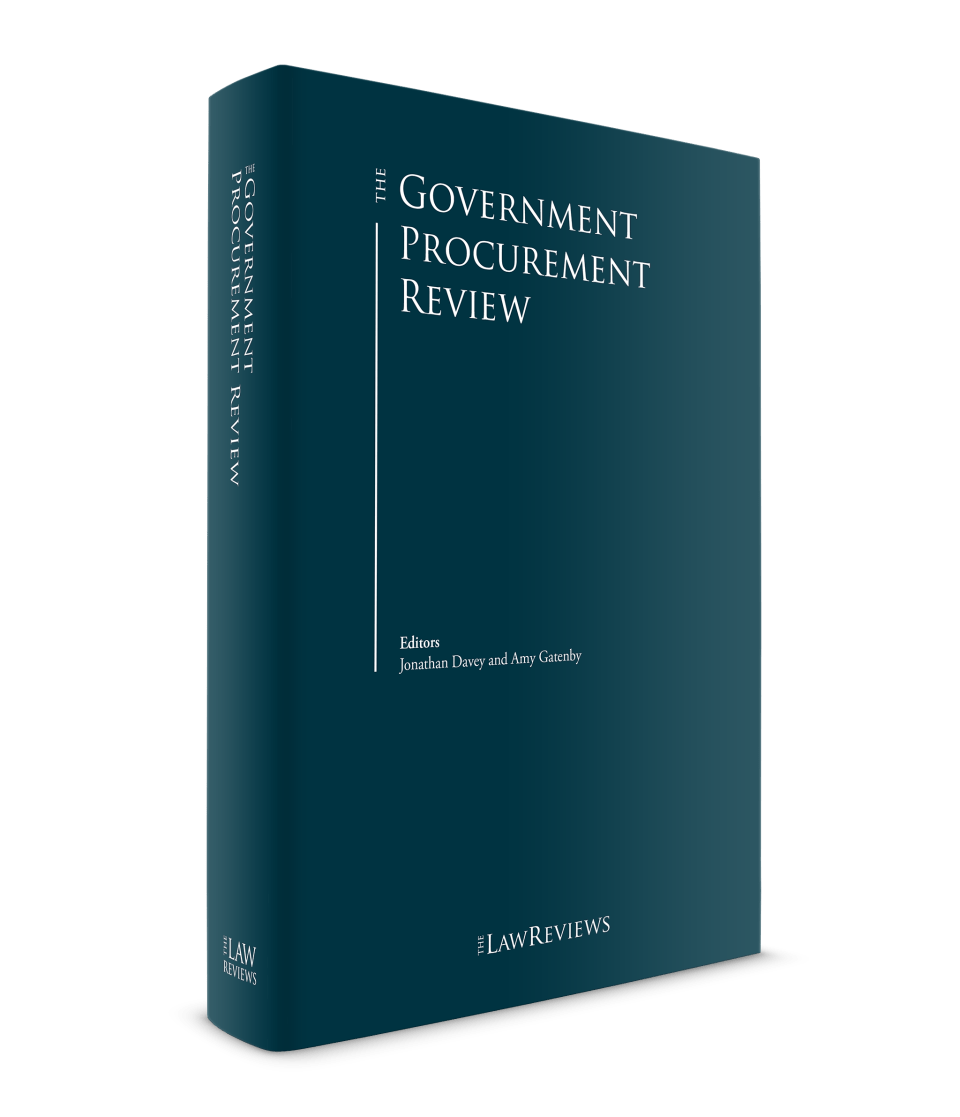
Nader, Hayaux & Goebel contribute to the sixth edition of The Government Procurement Review.

Socios Javier Arreola y Vanessa Franyuti wrote the Mexican chapter of the sixth edition of The Government Procurement Review.

They gave an update on the legal framework governing how the Mexican government and state-owned enterprises acquire goods, services, contract public works or otherwise partner with the private sector has undergone considerable amendments and additions in recent years to improve procurement practices and processes, combat corruption and bid rigging, and to introduce new mechanisms facilitating the implementation of projects in conjunction with the private sector.

The entire publication can be downloaded here.


London calling: reflections on bilateral trade between the UK and Mexico

In an extensive interview with Christina Mckeon Frutuoso of Latin Lawyer, Nader, Hayaux & Goebel´s resident partner in London, Yves Hayaux-du-Tilly Laborde, reflects on how far bilateral relations between the UK and Mexico have come and whether Brexit and the election of Donald Trump in the US will make that relationship stronger.

A transcript of the interview, which was first published on Latin Lawyer’s website on 23 April 2018, is rendered below:

Latin Lawyer: Where is UK-Mexican trade currently looking positive?

Yves Hayaux-du-Tilly: The food and drinks industry is growing on both sides: whiskey is being exported to Mexico – it represents around 8% of exports into Mexico – and tequila imported to the UK. There’s a massive consumer market now in Mexico, a country with a huge demographic and an increasing number of young consumers. Mexican restaurants are also growing exponentially in the UK. There’s a lot of appetite for these kinds of projects.

Insurance investment has also been positive on both sides. There’s currently only two Latin American investors into Lloyd’s of London, both of which are Mexican, which is both a recent and important development.

LL: What makes Mexican investors more attractive than other Latin American insurance investors, using Lloyd’s as a case study?

YH: I think the fact that the only two Latin American investors are both Mexican has to do with the sophistication of Mexican insurance companies; the appetite that Lloyd’s and the London market has for Mexican risk; the volume [of risk] is also quite attractive; and the reputation of Mexican insurance companies which is very good.

LL: Which other sectors have seen strong relations between the two nations?

YH: Fintech is going to grow in a very important manner. The UK government has been extremely helpful and engaged in sharing best practices with Mexico in relation to the recently passed fintech law, especially concerning the sandbox concept and how the FCA has been dealing with it. Mexican companies [in London] are now looking forward to bringing some of the best practices they have learnt here over to Mexico.

LL: Where do you see room for improvement in UK-Mexico trade?

YH: We have all heard about UK Expert Finance (UKEF)’s £5 million pound facility [pledged to help UK businesses looking to export to Mexico] which is very important, but not enough has been done to employ that £5 million in actual loans to British companies. There’s only really been one project so far, the Metrobus project, funded by Santander, which will see the export of British double decker buses to Mexico City. But considering the sum available, I think there is more to be done.

LL: In what industries can we expect this UKEF money to be invested?

YH: I think a lot will go into energy, as was discussed at UK Mexico day last month, and the UK is already leading investments into Mexico’s oil and gas sector. The number of British companies that have been successful in their bids exceeds any other nationality in general terms. You have the big companies like BP and Shell, but other lesser-known companies like Capricorn and Premier Oil are finding great ground to develop with the opening of Mexico’s oil and gas industry.

LL: Where has investment been disappointing between the two nations?

YH: What’s been most disappointing is the number of infrastructure projects in Mexico in general terms. There has only really been the one major project – the Mexico City airport – which of course has been very successful: a number of British companies have been involved in the project, including [British design and engineering firm] Foster and Partners, as well as others involved in the construction, supervision and engineering side of things.

A lot was said [by the Mexican administration] about doubling the capacity of ports and more social infrastructure at federal level but really, we haven’t see this materialise. I wanted to see more major projects aside from hospitals or highways. There is the train project between Mexico City and Toluca currently underway, but there are question marks over the benefits of such a project. There was also the high-speed train to Guadalajara project, which was cancelled.

LL: A number of UK law firms have opened up offices in Latin America recently [Kennedys, Clyde & Co LLP and DAC Beachcroft]. Do you think we can expect to see more opening in Mexico?

YH: I don’t really think many other firms are interested in opening up an office in Mexico. Most English firms we work with have not contemplated this and are quite happy working with Mexican independent firms. The only thing that might bring about this change would be a tremendous increase in capital markets and energy work. But for now, everyone seems happy to continue working on a cross-border basis and relying on local counsel for the Mexican components. Of course, there are firms like Hogan Lovells and Norton Rose Fulbright [expanding in Mexico] that have decided not to work like that, but it’s debatable whose approach is best.

LL: Going forward, how can the UK and Mexico make bilateral relations stronger?

YH: The only way we are going to be able to make this bilateral relationship work is through more engagement on a personal level from key stakeholders. This is something Nader Hayaux has previously considered, back in 2010 when we opened in London. We were in the midst of the financial crisis, coming from the boom of the 2000s when the problem at the time for lawyers was getting the work done, there was so much of it. That all then changed once the stock markets crashed. At the time, we were concerned over relying so much on the US, and we wanted to have more sources of work and relationships. Part of our decision to open in London was that we needed to divest our interest, and we saw that no Mexican firm was doing enough to develop relationships with European law firms and clients. By opening an office here, we were thinking long-term.

LL: Tell us about the role of the Mexican Chamber of Commerce, which you founded in 2011.

YH: When we [Nader Hayaux] opened our office in London, we also set our sights on helping to form a Mexican Chamber of Commerce to create a platform to permit private sector organisations and governments to collaborate with a mutual aim to grow trade and investment between UK and Mexico. Trade between the two countries is £3.6 billion, but more needs to be done. We hear a lot of rhetoric about the importance of Mexico for the UK, but the city of London is not pulling its weight in terms of allowing New York dominance over Mexican financial services. The UK would benefit from being more present, for example in areas like asset management, but I’m still waiting to see how long it will take London to put up a fight against New York to get more Mexican business. So far, New York dominates completely – there are currently only two UK banks and only one UK insurance company, Bupa, in Mexico.

LL: Why do you think London, until now at least, has been hesitant to put up this fight?

YH: My theory is that the UK has been very comfortable with Europe, and their presence in Southeast Asia, in former colonies, is stronger than in Latin America. There probably is this perception that the US dominates and controls Latin America, and the UK has a natural tendency to leave Latin America to the US. But Brexit and the Trump administration have pulled all of this into question. Today, nothing is to be taken for granted.

LL: How has Brexit and the Trump administration affected legal practice around the world?

You’ve probably heard Einstein’s definition of stupidity – doing the same thing and expecting different results. But times have changed, and I think Einstein fell short – nowadays, it seems stupidity is doing the same thing and expecting the same results! If countries continue dealing with Trump’s US as they have dealt with the US in the past, their expectations are going to fall short. This attitude applies to the legal industry also – lawyers can’t expect to practise law in the same way they did even five years ago. The Trump administration and Brexit have caused Mexico, the US and the UK to rethink their relationships. As a result, the UK government has singled out and made clear the relevance and importance it now places on its relationship with Mexico in a post-Brexit era.

LL: So Nader Hayaux feels prepared to face the challenges that come in a post-Brexit era?

Nowadays, law firms have Trump and Brexit as sources of potential work and relationships; when we opened in London in 2010, the financial crisis was our backdrop amid concerns that we were relying on the US so much. I think we are in the right place at the right time, as a result of the long-term project we set out on when we opened here in London. But opportunities are like red buses – you might be waiting for a while, and then suddenly five come at once. What’s important though, is to be standing in the bus stop, in order to see them coming.

Copyright © Law Business Research


“Mexico Day” held in London celebrates UK-Mexico bilateral relationships and investement links

Nader, Hayaux & Goebel´s London office participates in the “Mexico Day”, hosted by the UK Mexican Embassy, the government institution ProMexico and the Mexican Chamber of Commerce for Great Britain.

The event, held in London on 21 March 2018, celebrated its third edition.  The Mexico Day had opening remarks by Ambassador Julian Ventura and the Department of International Trade’s Minister for Investment, Graham Stuart who highlighted the broadening and deepening of trade and investment links, as well as some of the main initiatives carried out by both governments to strengthen the bilateral relationship.

Successive panels and keynotes by senior government officials and business leaders showcased opportunities in key sectors, including energy, infrastructure, insurance and technology in financial services. ProMéxico, Mexico´s trade and investment promotion agency, offered an overview of the country’s main structural strengths, including its macroeconomic stability and the ongoing implementation of various structural reforms; Mexico´s Development Bank CEO highlighted the strengths of the economy in the context of the complex global situation; the President Commissioner of the National Hydrocarbons Commission presented the progress achieved in the bidding rounds on hydrocarbons, and engaged in an interactive dialogue with some of the key players in the British energy industry, including British Petroleum, Ernst and Young and the firm Norton Rose Fulbright.

Furthermore, “Mexico Projects Hub”, a digital platform with information on tenders for infrastructure projects was presented by a representative of Mexico´s Infrastructure Bank, Banobras, which will foster deeper bilateral synergies, taking advantage of financing tools such as the credits granted by the UK Export Finance. The segment dedicated to the new Special Economic Zones in Mexico, emphasized opportunities for British firms and their importance as drivers of regional growth and development.

The seminar also included a presentation of the recently enacted Law to Regulate Financial Technology Institutions in Mexico (“Fintech Law”), generating an interesting dialogue between experts from both countries on opportunities and potential of the respective FinTech ecosystems. The Mexican Association of Insurance Institutions identified recent developments in the Mexican insurance industry and its growing complementarity with the Lloyd’s market in London.

In the closing session, the President of the MexCC and NHG partner, Yves Hayaux du Tilly, underlined the importance of collaboration between governments and the private sector. That evening, the traditional Gala Dinner and Award of the MexCC took place. British and Mexican companies Bishopsgate Dental and Gringa Diary were awarded for their entrepreneurial leadership and British Petroleum and Mexichem received awards for their extraordinary contribution to the strengthening of the bilateral economic relationship.

The event was covered by The Latin Lawyer. The Mexican Chamber of Commerce issues a press release on the Mexico Day. A transcript of the speech by Graham Stuart of the UK Government can be consulted here.